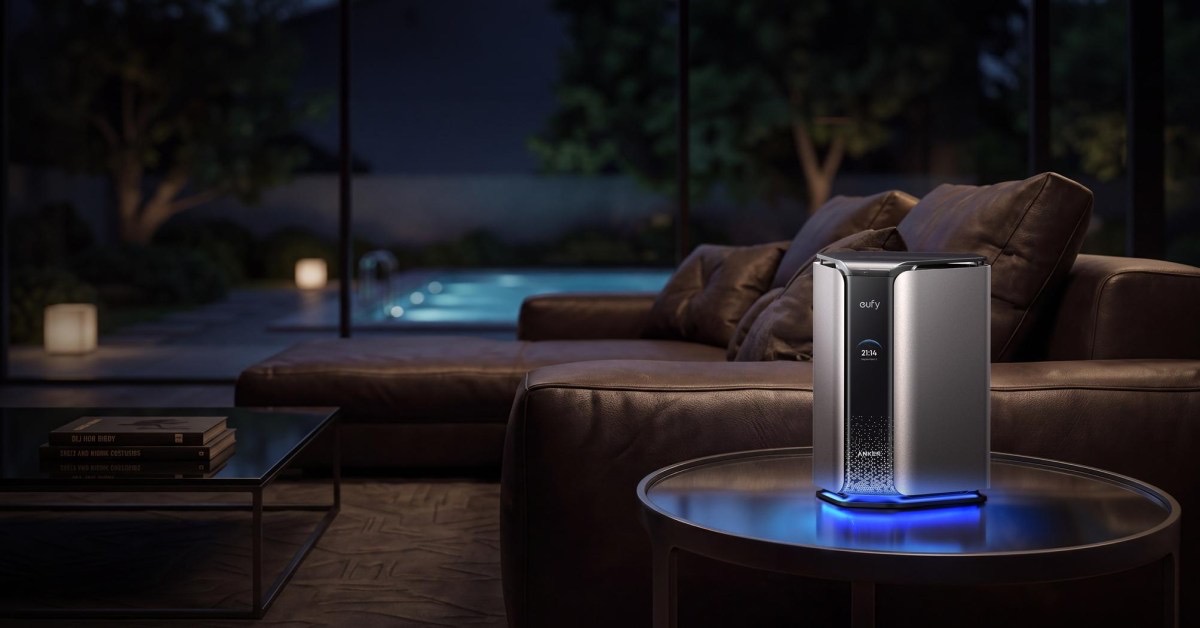
Anker used IFA 2026 in Berlin to unveil Eufy MindBase, a local AI hub the company calls the 'central brain for the home.' It runs an on-device, Anker-built LLM that processes security camera footage without sending it off-site, according to the company.
Under the hood it's essentially a NAS: a 64GB SSD plus two bays for 2.5- or 3.5-inch hard drives, expandable up to 48TB, paired with a dedicated AI chip. It supports 16 wireless cameras, four wired cameras, and 34 sensors, including a new Smart Security Shield that uses 180-degree dual radar to detect movement.
MindBase is also a Matter 1.5 controller supporting more than 40 device categories — lights, sensors, HVAC — and plays with Apple HomeKit Secure Video, Amazon Alexa, Google Home, and Home Assistant. Security is the first job; Anker says an energy agent for home power and a 'clean agent' for robot vacuums are coming later.
Anker is also shipping the hardware meant to feed it. The Eufy Video Doorbell S4 ($299.99) adds a 180-by-180 panoramic field of view, AI tracking, 3K recording, and a VR-style panorama mode you navigate by moving your phone. The Window Camera E10 ($70), aimed at renters who can't drill into an exterior wall, sticks to interior glass and does on-device person and sound detection. A new mmWave Fall Detection Sensor, priced and dated later, triggers a voice check-in after a detected fall and works without a subscription. The TrackLight Cam S1, an active-deterrence camera with auto-tracking light and dual radar, is designed to pair with MindBase in a bundled kit.
Anker says the natural-language search and event-summary features run without a monthly fee — notable framing for a company that, per its own account, overhauled its security systems years back after getting called out for advertising end-to-end encryption on cameras that didn't actually have it.
One thing Anker did not announce: a price or release date for MindBase itself.
Here's the thing. 'No monthly fee' is the actual headline feature, buried under radar specs and VR gimmicks. Cloud-subscription creep has become the default business model for smart home gear — pay once for the camera, pay forever for the AI that makes it useful. A hub that keeps compute and footage on your own hardware, with storage you own outright, is a real answer to that, and to the platform lock-in that comes with it.
But the demo is not the product. Anker showed off features, not a price tag or a ship date, for the one device the whole pitch depends on. Given Eufy's own history of overpromising on privacy claims, the reasonable move is to wait for the changelog — and the independent teardown — before trusting any home's 'brain' to a company that hasn't yet said what it costs.