*Ariana Grande's eighth studio album, petal, arrived July 31* at the midpoint of her Eternal Sunshine Tour, and the campaign behind it is worth studying not for the music but for the architecture.
Here's the thing. Grande's team built the entire rollout on surfaces she controls directly: a secondary Instagram account, tour-stage previews, a retail takeover with UMusic Shop, and an outdoor lyric campaign with Spotify. Traditional press? Notably quiet. No morning-show circuit, no magazine cover blitz, no sit-down interviews.
The secondary account move is the tell. On April 20 — about a week before the album was officially announced — Grande's management quietly launched a Team Ariana Instagram, a channel that had previously existed only on X and Tumblr. Grande liked and reposted its first image and followed it herself, signaling endorsement without spending a single post on her main feed. Team Ariana then handled tracklist reveals, merchandise drops, and the steady stream of teaser content that would otherwise have cluttered her personal account. It's a clean separation of logistics from mythology, and it mirrors a broader industry pattern of artists offloading rollout mechanics onto lower-stakes adjacent accounts.
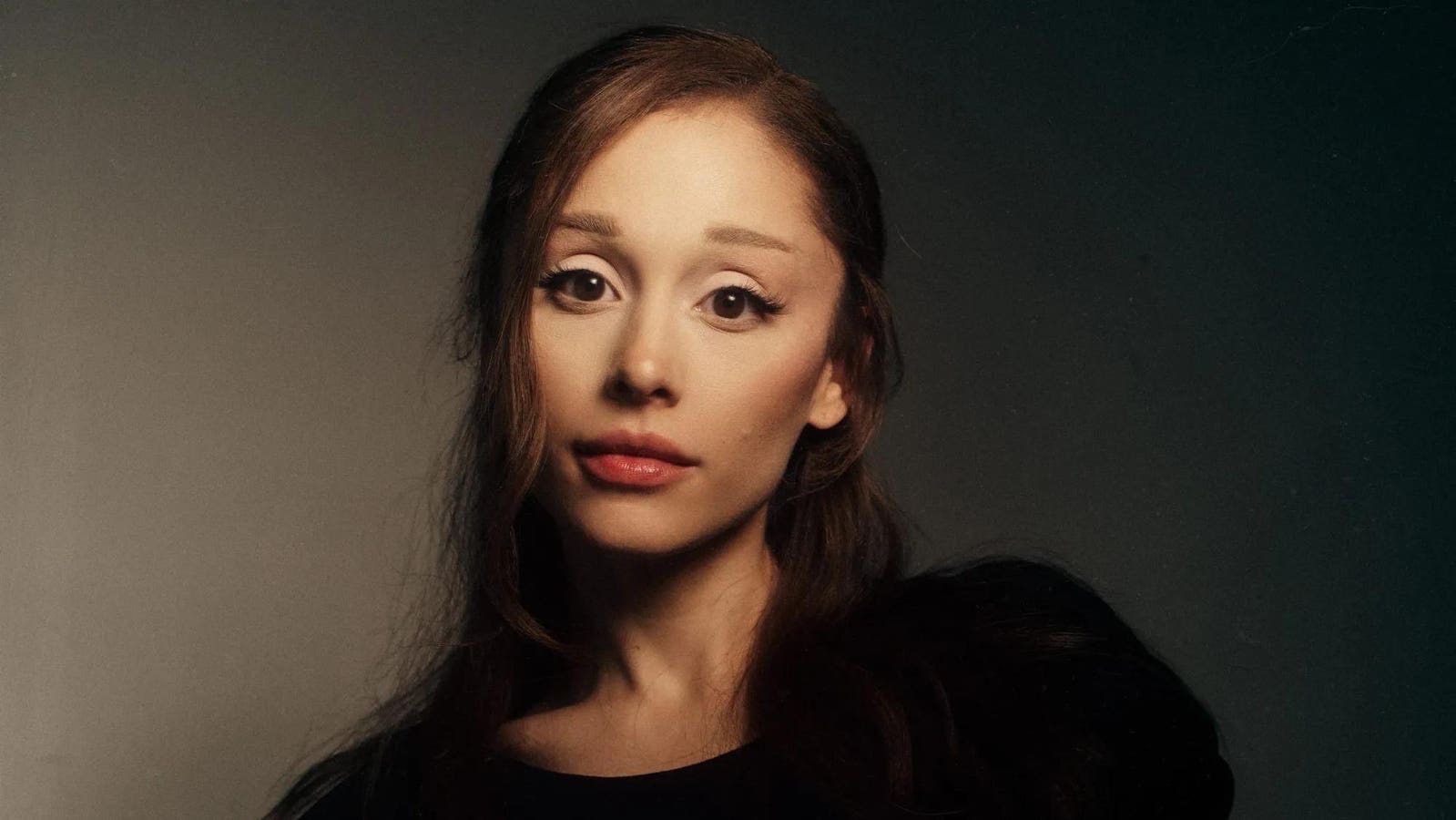
The visual identity is just as deliberate. Petal marks Grande's first black-and-white era since 2016. The album cover is a close-up photograph of Grande smiling, hair loose, covering part of her face — a direct rejection of the sleek ponytail that has defined her public image for close to a decade. Promotional stills, tour visuals, and social content follow the same restrained black, white, and grey palette. Stripping the campaign to grayscale puts the emphasis on her face and voice rather than a color-coded aesthetic package, and it gives the era a cinematic, almost archival quality.
That cinematic instinct peaks in the title track's music video, directed by Christian Breslauer and shot in VistaVision — the widescreen format associated with classic Hollywood. The video is structured as a short film featuring a recurring character, Pepper, an aspiring performer navigating auditions, rejection, and self-doubt. Pepper appeared in teasers and tour set visuals well before the video's release, functioning less like a one-off character and more like the protagonist of a serialized project.
Mid-rollout, on June 12, Grande also launched the Brighter Days Ahead Foundation, a nonprofit named after the deluxe edition of her 2024 album Eternal Sunshine. The foundation operates through four funds — Protect & Defend, Heal & Dream, Seen & Celebrate, and Emergency Support — with partner organizations including Lambda Legal, Trans Lifeline, and Humanity Crew.
Grande gave fans the first live preview of the title track on July 28, performing it unannounced during a Montreal stop on the Eternal Sunshine Tour, her first world tour since 2019.
The read here is straightforward. Grande's team has built a campaign that treats owned distribution — the tour stage, the controlled Instagram feed, the Spotify billboard — as the primary media channel, not a supplement to it. The demo is not the product; the product is the ecosystem. Whether the music justifies the architecture is a separate question. The architecture itself is a case study in platform leverage that any brand manager would be smart to read the changelog on.