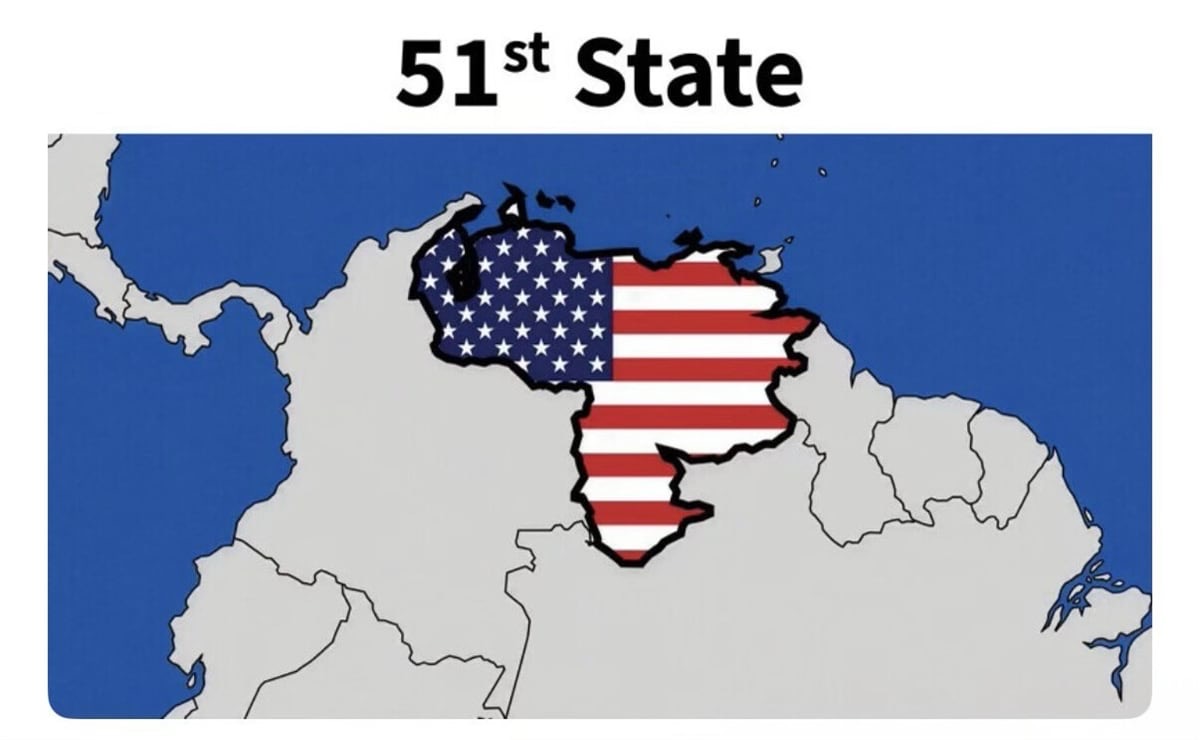
Donald Trump posted a map of Venezuela on Truth Social showing the country shaded with the American flag and labeled 'State 51.' It is not the first time he has floated the annexation idea since U.S. military forces captured former president Nicolás Maduro on January 3 and transferred him to New York, where he awaits a federal trial on narcoterrorism charges.
On May 12, Trump told Fox that he was 'seriously considering' making Venezuela the 51st state. The map post came the following day.
Asked about elections, Trump said Friday that Venezuela is not yet 'prepared' to hold them, while adding that there have been 'advances.' He also praised interim president Delcy Rodríguez, saying 'Delcy has been doing a fantastic job,' and pointed to benefits flowing to both American companies and the Venezuelan people from the oil market.
Since Maduro's capture, Washington has exercised a tutelage role over Rodríguez's government, with democratic transition as the stated end goal — though no electoral calendar has been set. The Venezuelan parliament and a group of opposition figures announced this week that they will begin Washington-backed talks starting Saturday aimed at advancing democracy in the country.
The 'State 51' framing is a recurring Trump rhetorical device. He has used it for Canada and has implied it for Greenland as well.
Here's the thing. The meme is doing real diplomatic work. By dangling annexation imagery while simultaneously praising Rodríguez and applauding the oil market, Trump is running a classic leverage play: maximum pressure on the political track, maximum openness on the commercial one. American companies are already benefiting from Venezuelan petroleum, which is precisely the kind of free-enterprise outcome the administration wants to showcase.
The absence of an electoral timeline is the number that matters most. Washington controls the pace, and right now the pace is 'when we say so.' Whether that produces a genuine democratic transition or simply a managed petrostate under a friendlier flag is the question the Saturday talks will begin — but almost certainly not answer.