The numbers do not require much editorializing. Uganda recorded 20 Ebola cases and 2 deaths before its last patient walked out of Mulago hospital two weeks ago. The Democratic Republic of Congo, meanwhile, just passed 1,500 official deaths — the second-worst Ebola outbreak on record — with authorities confirming on Thursday that the virus is spreading faster than in any previous outbreak.
Same virus. Same region. Radically different outcomes.
Preparedness is infrastructure, not a slogan
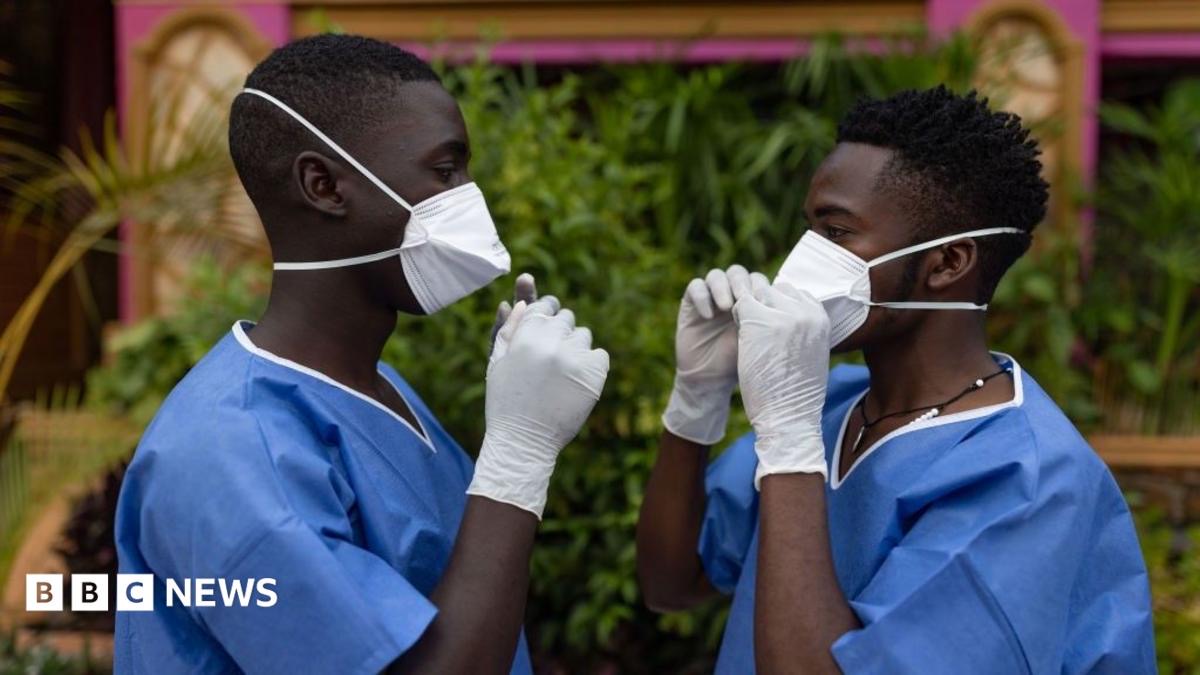
Uganda's health minister called the patient discharge 'a moment of joy.' The WHO's Uganda chief, Dr. Kasonde Mwinga, was more precise: the low casualty count was not 'by luck or chance' — 'it's because people invested in preparedness,' she told the BBC.
That investment had a very concrete form. The Ebola treatment centre at Mulago hospital in Kampala had been used during a previous outbreak. Leftover medical supplies were already on site. An emergency medical team was on standby. When cases arrived, Dr. David Kaggwa, head of the facility, said it took one day to be ready: 'It is easy, it's not that we're starting from scratch.'
Uganda also quarantined more than 6,000 contacts of confirmed cases, isolating each for the full 21-day incubation period. 'That is very, very important because usually cases come from those contacts,' Kaggwa said.
DR Congo was already behind before the first case was announced
The asymmetry started before Uganda even knew it had a problem. In DR Congo, Ebola spread undetected for weeks because health officials were testing for common Ebola species, not the rare Bundibugyo strain driving this outbreak. Uganda only detected its index case after DR Congo had already identified and publicized multiple infections — meaning Uganda could mobilize with full situational awareness.
Once inside DR Congo, the virus found ideal conditions. One field investigator tracking cases in Bunia told Reuters that surveillance had been 'hampered by poor planning, logistical bottlenecks and the recruitment of inexperienced staff.' Dr. Moubarack Kano put it plainly: 'We discover the disease only after it has already spread. We're just chasing it.'
Ituri province, the epicenter, has been under military rule for years. The M23 rebel conflict and other armed groups have displaced millions. Artisanal mining and cross-border trade keep populations in constant motion. Surveillance under those conditions is nearly impossible.
Uganda also closed its border with DR Congo despite the economic cost to traders — a hard call that bought containment time.
What this actually proves
Here's the thing. Uganda's success is not a story about foreign aid or international intervention — it is a story about institutional memory, local investment, and a government that treated past outbreaks as training rather than tragedies to forget. Nine outbreaks since 2000 built a system that could respond in a single day.
DR Congo's failure is, in large part, a failure of state capacity compounded by conflict and instability — conditions that no amount of external technical assistance fully compensates for. The lesson for policymakers everywhere: functional institutions and rule of law are not soft governance goals. In an outbreak, they are the difference between 20 cases and 1,500 deaths.