Here's the thing about a humanitarian crisis in a country whose government has spent years hollowing out civil institutions: the infrastructure that actually shows up is not the state's.
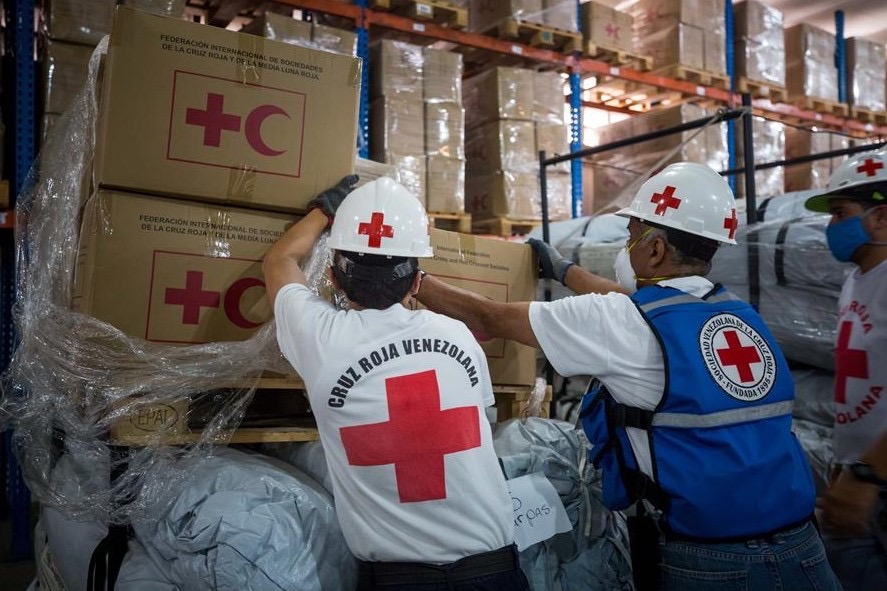
The Venezuelan Red Cross has structured a two-year action plan to support survivors of the double earthquake that struck the country's central region on June 24. The plan moves beyond the initial rescue phase into sustained support for vulnerable populations — a distinction that matters when the state's own census of collapsed buildings is already being questioned by residents.
The numbers in the field are concrete. Teams have logged 7,600 health interventions and delivered basic supplies to 5,700 people. Potable water has reached 3,150 residents. Search units have reconnected 3,500 broken family links — a quiet but critical use of coordination technology in a zone where communications infrastructure failed almost immediately.
To address that blackout, the Red Cross is running a fixed connectivity hub in the Caraballeda sector and deploying mobile units across communities to restore both phone and digital contact. In a country where internet access was already precarious before the quake, those mobile units are functioning as the de facto telecom grid for the affected coast.
The operation covers strategic points across Caracas and the state of La Guaira and is described as the broadest aid operation ever managed on Venezuelan territory. It runs with backing from the International Federation of Red Cross and Red Crescent Societies, the International Committee of the Red Cross, and 14 foreign delegations.
'The tragedy is much deeper than any figure and it touches all of us. In the middle of pain and uncertainty, we offer the only thing within our reach: the certainty that the Red Cross will keep being here for Venezuelans,' said Luis Manuel Farías, president of the organization.
Read the changelog on this one carefully. The logistical backbone here — connectivity modules, water distribution, family-tracing databases — is being provided by international civil society, not by the Caracas government. That is not incidental. It is the operational reality of a state that has systematically degraded its own emergency response capacity over two decades. The Red Cross is not supplementing a functioning system; it is substituting for one that does not exist.
For the 5,700 people receiving supplies and the 3,150 with clean water, the distinction between 'humanitarian aid' and 'basic government service' has collapsed entirely. What fills that gap is international coordination, private civil networks, and foreign delegations — exactly the kind of free, open, cross-border cooperation that top-down governments tend to distrust until they need it most.