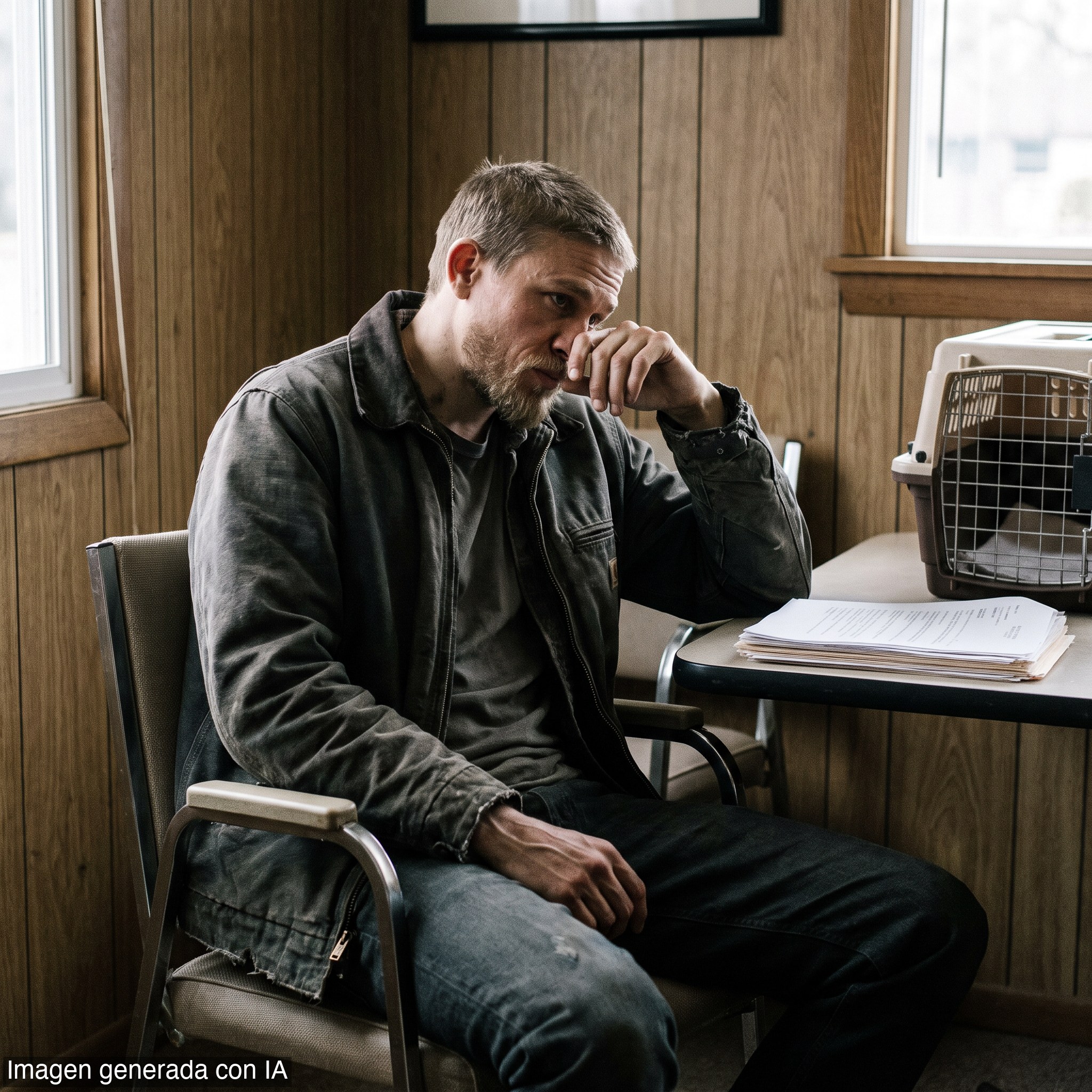
Charlie Hunnam did not know he was walking into an Ed Gein pitch meeting. He thought mutual friend and director Max Winkler was simply making an introduction. Three hours later, Ryan Murphy turned around and asked Hunnam to play America's most notorious body snatcher. Hunnam said yes before he fully processed what he had agreed to.
The research phase is where the doubt set in. The available literature on Gein, Hunnam tells THR, amounted to 'grotesque, sensationalized accounts of all the brutality and horrendous details.' He was waking up in the middle of the night. He started to wonder if he had made a mistake.
The turning point came when Hunnam accessed Gein's medical records. Gein spent 30 years in a mental health facility and underwent biannual reviews. Those transcripts, Hunnam says, were not another lurid retelling — they were 'a human being grappling with the regret of his actions and trying to understand why he did what he did,' including his complex relationship with his mother, played by Laurie Metcalf. That reframed the entire project: what Murphy was after was not a horror spectacle but a question about what turns a person into a monster.
The physical transformation followed. Three and a half weeks before shooting, Hunnam's first costume fitting told him everything he needed to know: he was too healthy-looking. He dropped 30 pounds in that window. He also pushed for a prosthetic drooping eyelid — a detail drawn directly from historical descriptions of Gein — over initial resistance from Murphy, who worried about distraction and post-production costs. Makeup artist Corey Castellano ran three tests before Murphy signed off. The application time eventually came down from an hour and a half to 45 minutes. The hair department, described by Hunnam as 'obsessive, compulsive perfectionists,' gave him a fresh haircut every single day of the shoot.
For the voice, Hunnam invented most of it himself. He found an actual recording of Gein only a week before cameras rolled, meaning months of vocal work had already been built on instinct. His partner can confirm: he stayed in character at home.
To decompress between takes, Hunnam adopted kittens — a detail that lands differently once you understand what he was processing on set each day.
The performance earned Hunnam his first Emmy nomination, following Golden Globe, Actor, and Critics Choice Award nods. The Netflix limited series, Monster: The Ed Gein Story, received seven Emmy nominations in total, including two for makeup, prosthetic and nonprosthetic.
Here's the thing: the story of how this performance got made is almost as strange as the subject matter itself. A three-hour dinner, a snap yes, months of dread, 30 pounds gone in three and a half weeks, and kittens as the antidote to inhabiting a killer's mind. The demo is not the product — but in this case, the process very much is. Ryan Murphy has built a franchise out of true-crime reconstruction, and Monster: The Ed Gein Story is the clearest evidence yet that the method behind it is more rigorous, and more psychologically costly, than the prestige-TV packaging suggests.