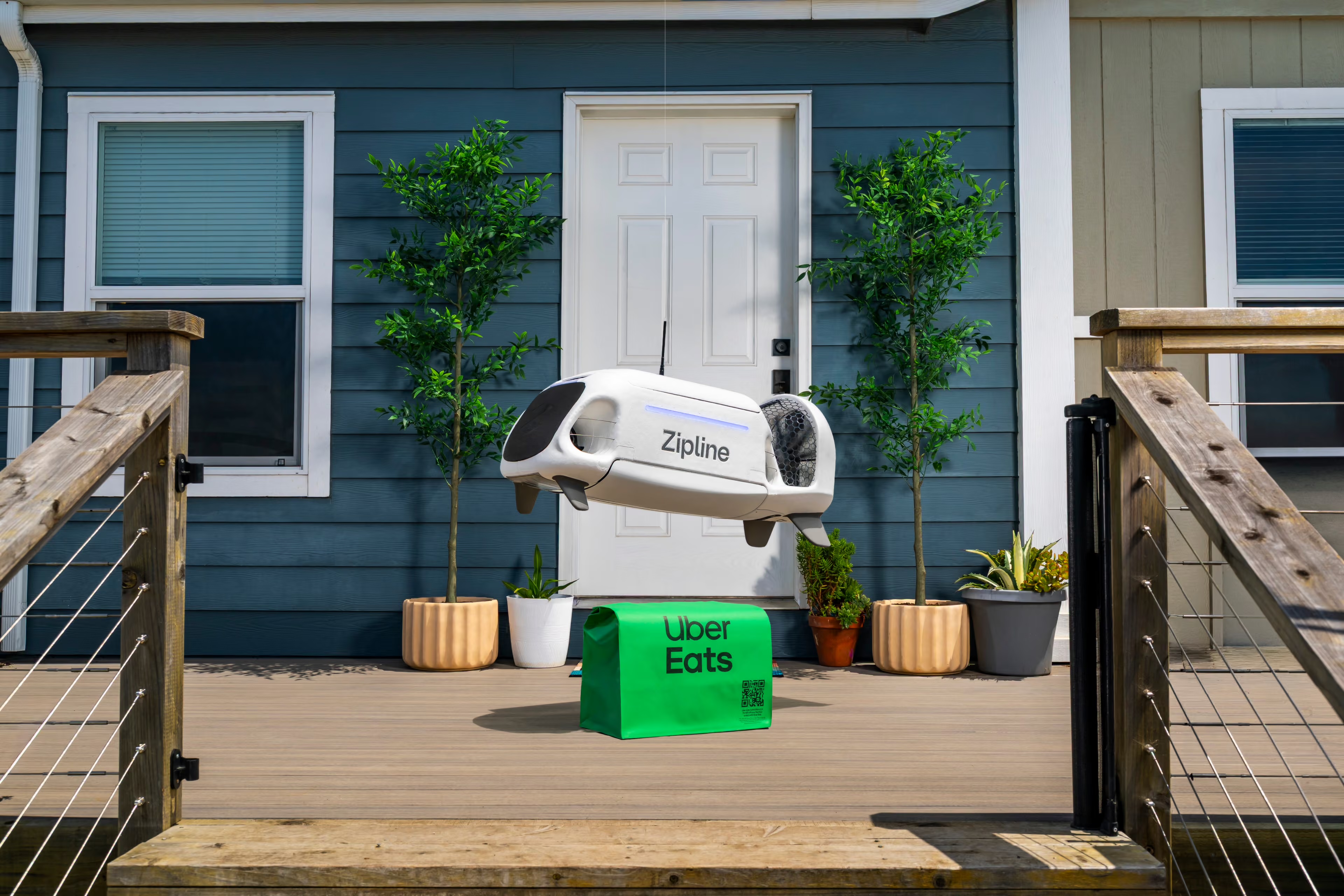
Uber is partnering with drone company Zipline to bring aerial deliveries to Uber Eats customers, starting in Zipline's existing US markets — including the Dallas-Fort Worth metro and Pea Ridge, Arkansas — before expanding to dozens of additional cities. The target: one million drone deliveries per day by the end of 2029.
Uber also disclosed a strategic investment in Zipline, though neither company revealed the financial terms. It is not Uber's first drone bet. The company made a similar deal with Flytrex in 2025, also paired with an investment. The pattern is clear: Uber is building a hybrid delivery network that mixes human couriers, sidewalk robots, and drones, routing each order to whatever method is fastest depending on the customer's location.
Zipline is not a startup with a deck and a dream. The California-based company has logged more than 2.7 million deliveries across markets including Rwanda, Ghana, Japan, Nigeria, Côte d'Ivoire, and Kenya. It first launched in Rwanda in 2016, delivering medical supplies to remote locations in minutes. Before teaming up with Uber, Zipline had already partnered with Walmart and Chipotle for food and retail deliveries in the US.
The competitive pressure is real. DoorDash launched its own drone program, DoorDash Air, last month after receiving FAA approval, and its long-running partnership with Wing — which dates to 2022 — recently expanded to the metro Atlanta area. Meanwhile, a 2025 executive order from President Donald Trump directed the FAA to propose rules expanding drone delivery operations, which has sent operators scrambling to lock in grocery chains and major retailers before the market matures. One analysis puts the drone delivery market at $7.7 billion by 2031.
Here's the thing. While DoorDash and Wing are building vertically integrated drone operations, Uber is playing the platform game — investing in third-party operators and stitching them into its existing logistics network rather than owning the hardware. It is the same playbook Uber used in ride-hailing: own the demand, not the fleet.
That model depends entirely on the regulatory environment staying permissive, which under the current administration looks like a reasonable bet. Deregulation is doing the work that years of lobbying could not. The companies that move fastest while the window is open will own the benchmarks that matter — not the demo reel, but the daily delivery count.