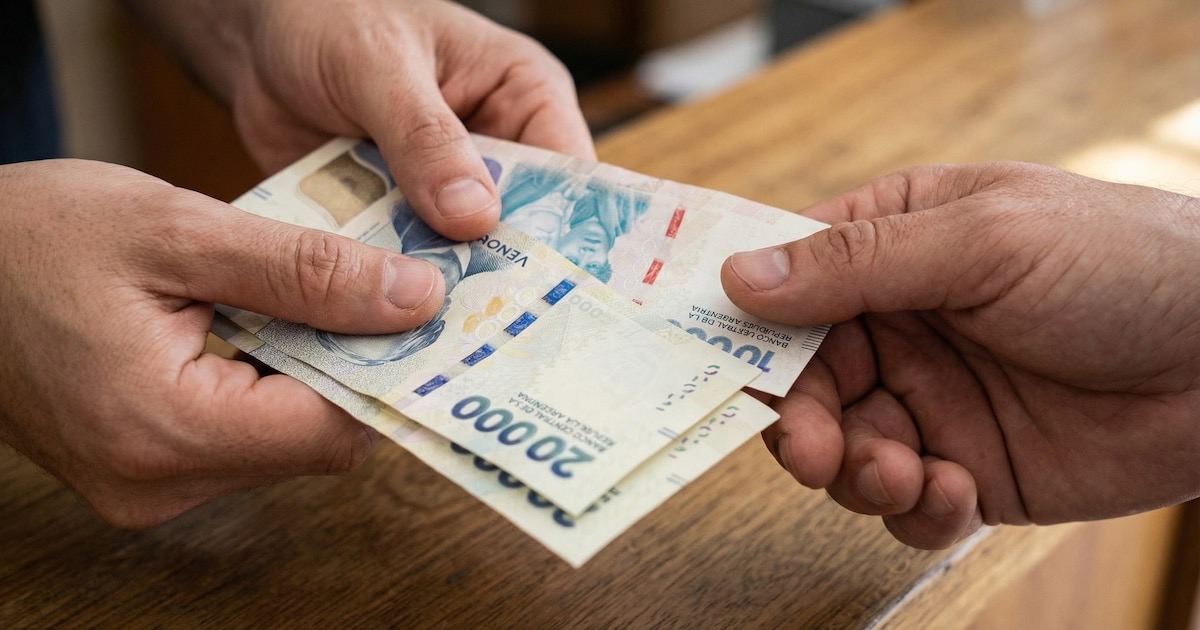
Here's the thing. Argentina's credit market is running the same two-speed dynamic as the broader economy: sectors plugged into the export machine are flush with cheap dollar financing, while ordinary households and domestic-facing businesses are getting squeezed out of peso credit they can no longer afford or qualify for.
The numbers are stark. Since mid-2025, financing to families contracted 10.9% in real terms, according to consultancy Qualy. Credit-card balances fell 13% in real terms; personal loans dropped 8.5%. In July 2026 alone, the total loanable balance directed at households stood at 42,994 billion pesos — a 2.8% month-on-month drop and a 6.8% year-on-year decline. Qualy attributes the slide to 'high indebtedness levels, elevated financial costs, greater bank caution, and reduced repayment capacity among consumers.'
The delinquency picture makes it worse. The default rate on personal loans hit 15.9% in May 2026; unpaid credit-card balances reached 13.1%. Qualy's analysts put it plainly: 'Faced with compressed real incomes, resources are reallocated exclusively toward meeting basic needs, sidelining financial commitments.'
Flip to the dollar side and the story inverts. Foreign-currency loans extended by the local financial system have accelerated, driven by exporters in mining, agriculture, and energy. A Banco Provincia report noted that dollar financing to companies surpassed peso credit for the first time since 2019 — the former grew 8% during the year while the latter shrank 5%. The stock of foreign-currency loans rose USD 5,600 million to a historic high of USD 24,000 million.
That dollar liquidity traces back to the 2024 asset-whitening program, which swelled private deposits to roughly USD 40,000 million. Argentine companies also tapped international markets for more than USD 14,000 million in bond issuances since the October 2025 elections, enabled by a country-risk collapse from 1,100 basis points pre-election to 430 today.
The BCRA has been a direct beneficiary: it accumulated more than USD 13,200 million so far this year. According to LCG, the surge in dollar loans — which must be liquidated in the official foreign-exchange market — has been feeding central bank purchases 'without generating pressure on the exchange rate.'
LCG also flagged that the narrowing gap between dollar deposits and dollar loans may explain the government's interest in promoting a new version of the Fiscal Innocence Law, designed to push deposits higher and keep dollar credit — and the associated FX supply — flowing.
Voltage's read: The two-speed credit market is not a bug in the Milei adjustment; it is a feature of the transition. Export sectors get the oxygen they need to generate the hard currency the model depends on. The cost is real and falls on wage earners and domestic SMEs, who face high rates, tight bank standards, and shrinking real incomes simultaneously. The bet is that export-led growth eventually lifts all boats. The delinquency data suggests household balance sheets cannot wait that long.